For Homeowners
Storm Damage Photo Guide
Your phone is the most powerful tool in your claim — if you point it at the right things. This 17-page field guide shows you exactly what to photograph, from which angles, and how to organize it so your damage file holds up when it matters.
The Problem: Your Photos Don't Prove What You Think They Prove
After a storm, most homeowners do the same thing: climb up (or zoom in) and snap a few blurry close-ups of a shingle. Then the adjuster comes, looks at the photos, and they prove nothing — no context, no scale, no timestamps, no pattern.
Adjusters document in a specific language: wide establishing shots, slope overviews, then tight damage photos, all timestamped and organized. When your file speaks that language, it gets taken seriously. When it doesn't, your damage is easy to dismiss.
Your contractor's photos aren't yours — you need your own evidence file, taken your way, before anyone else touches the roof.
The Storm Damage Photo Guide is that system. What to shoot, in what order, with the phone already in your pocket.
What's Inside
17 pages of plain-English guidance. Here's what's inside:
- Safety rules first — when to stay off the roof entirely, and how to get usable evidence with zoom, binoculars, or a pro instead.
- Phone camera setup — the settings that matter: flash off, grid on, max resolution, location tags on.
- The wide-to-tight system — address shot → slope overview → damage close-up, in that order, every single time.
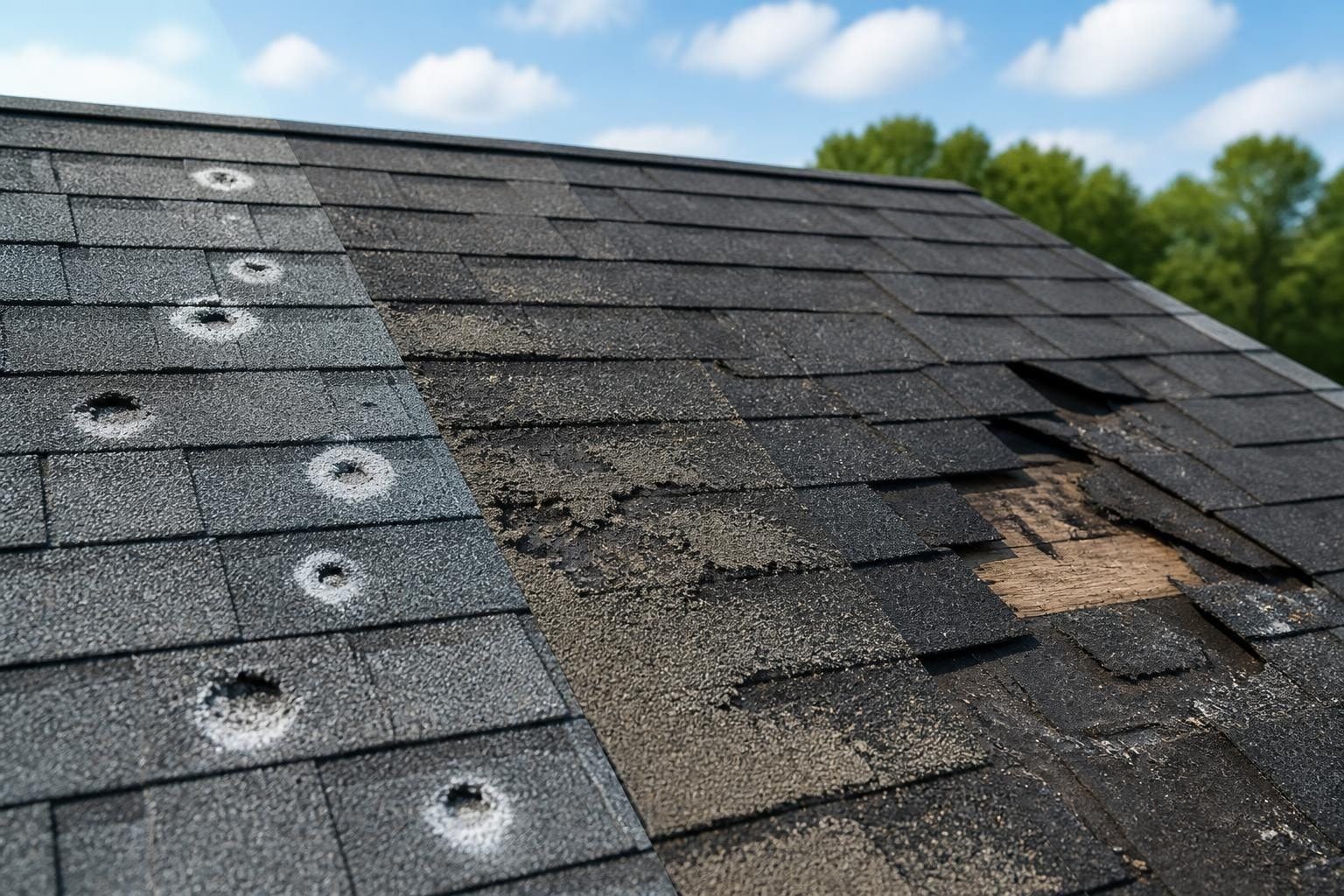
- Hail damage signatures — what a real hail hit looks like versus blisters, wear, and manufacturing marks.
- Wind damage signatures — creased, lifted, and missing shingles, and how to capture the pattern across a slope.
- Flashing, vents & penetrations — the close-ups adjusters actually zoom in on.
- Gutters, downspouts & collateral — dents, splatter marks, and ground-level evidence most people walk past.
- Attic & interior — leak stains, decking shots, and interior damage that backs up the exterior story.
- Every roof type — shingle, metal, tile, wood, and flat: what changes in your approach for each.
- Organizing & timestamping — a folder structure and naming system so nothing gets lost or questioned later.
- Using photos in supplements & appeals — how your pictures plug directly into the claim paperwork.
- Printable photo checklist — take it outside with you and check shots off as you go.
Is This For You?
This is for you if…
- You want your own evidence file, independent of any contractor or adjuster
- The adjuster already came and went and you suspect damage was missed
- You'd rather document now than argue about it six months from now
- You own a phone and can follow a checklist
This is NOT for you if…
- You need someone to physically inspect your roof for you (hire a qualified pro)
- You're looking for legal or insurance advice about your specific claim
- You expect photos alone to guarantee a claim outcome — no honest product promises that
Quick Answers
Is this professional photography or inspection advice?
Neither. It's practical documentation guidance — how to capture clear, organized, timestamped evidence with a phone. It doesn't replace a professional inspection.
Will good photos guarantee my claim gets approved?
No. Nothing can guarantee what a carrier decides. What thorough documentation does is make your file harder to dismiss and easier to support — through the initial claim, supplements, and appeals.
How do I receive it?
Instantly. After checkout you'll land on a download page with your PDF. PDF format — reads on any phone, tablet, or computer, and prints cleanly.
14-Day Money-Back Guarantee
Read it, use it. If it doesn't leave you clearer and better prepared, our 14-day money-back guarantee covers you. No forms, no interrogation.
Storm Damage Photo Guide
17 pages · PDF · Instant download
Buy Now — $27 (secure checkout — card payments via Stripe)
14-day money-back guarantee · No subscription